


 Accessories
 Art & Craft
 Brushes
 Drawing
 Inks
Inks
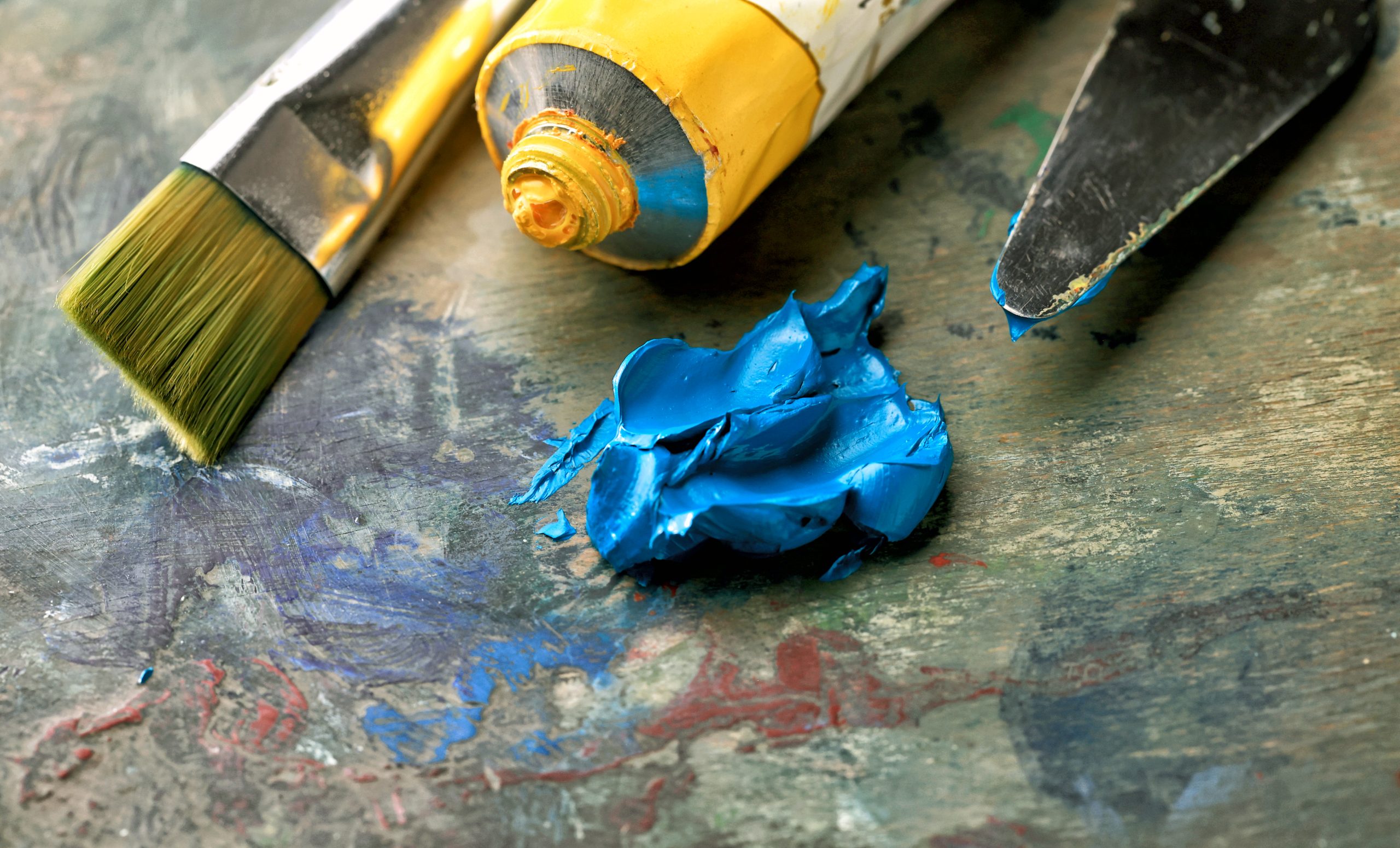
What is oil paint?
There are three main categories of oil paints: traditional, alkyd and water-mixable. One thing they all have in common is that they’re all made up of pigment and binder. The role of the binder is to protect the pigment and act as an adhesive.
Oil painting is a painting method involving the procedure of painting with pigments combined with a drying oil as the binder. It has been the most common technique for artistic painting on canvas, wood panel, or copper for several centuries.
How is oil paint made?
The process of grinding together pigment and binder is known as milling. Each particle of our oil paint pigments is coated in drying oil. This is critical because poorly dispersed pigment particles will clump together and create poor-quality paint. Making oil paint requires astonishing skill and knowledge. Every pigment absorbs oil differently, requiring individual milling processes for each colour.
What will I need to get started?
You’ll need:
a surface (canvas or panel)
brushes
paint rags to wipe off your brushes
a palette
palette knife
a cup for solvent
solvent (such as low-odour Sansodor)
oil paint of your choice
What ranges do Winsor & Newton have available?
At the moment we have four ranges of oil paint, created with different artistic approaches in mind.
Winsor & Newton Artists’ Oil Colour range
Winton Oil Colour
Griffin Alkyd Fast Drying Oil Colour
Artisan Water Mixable Oil Colour
A traditional oil paint, this provides the widest choice of colours with the highest pigment strength, ensuring the cleanest, brightest colours and best mixes
Also a traditional oil paint, this range offers dependable quality at an accessible price. It’s ideal for beginners who want to learn the fundamentals of oil painting, and perfect for any artist who needs to cover a large area or work on an underpainting.
Also made from pigment in oil, but in this case, the oil is polymerised to make a resin-like product, which results in a much faster drying time. It’s a useful tool for underpainting and can be mixed with traditional oils to accelerate drying even further.
Oils that can be cleaned up with water instead of solvents, whilst providing the same level of depth, lightfastness, performance and drying times as traditional oil colours. Perfect for artists working in shared spaces or those who are sensitive to chemicals.
Using mediums
Once you’ve picked your oil of choice, you’ll want to think about a solvent. Solvents thin your paint to make it more workable, without adding to the drying time.
Recommended by leading art schools, and often the only solvent permitted in their studios, Sansodor is a good choice for traditional oils and alkyds. It performs like turpentine but has a low odour, and is the least hazardous of the solvents.
Artisan has its own range of solvents and mediums uniquely suited to the water-mixable formula.
All solvents should be used in a well-ventilated room. Make sure to clear away paint-soaked rags and palettes after painting, and dispose of them in an airtight, solvent and flame-proof container.
Choosing brushes
If you want to make a mark with stiffer bristles that leave a texture, choose a Hog Brush. For a smoother mark, go for synthetic Monarch brushes.
Artisan has its own special range of brushes that work well with other brushes, too.
Choosing a canvas
Canvas is the go-to choice for most artists. Primed stretched canvases are easy to find, such as our Cotton Traditional, but wooden panels are also a great surface to work on.
Final preparation
Choose your palette, either wooden or Tear-Off Palettes, and grab a palette knife for mixing – and you’re all set!